Monday, August 31, 2009

Gamekings.tv - De Evolutie van Character Design

 
I was just featured along with Streamline Studios' Art Director Renier Banninga and other dutch developers on Gamekings.tv's weekly segment, The Evolution of ____. The theme is Character Design this week, click the title below the image for the video. We also recorded for another segment which I'll post about when it comes out. 
It's 30 mins, and Renier and I are the only ones speaking English, so be warned. Although my dutch is hardly up to par, I did pick up on a word or two here and there, and the images and footage is easy enough to follow. I think it does a pretty nice job of discussion character design from the early 80s up to now, with some good detail for its length. The montage at the end is great too.

Of particular note are some of the common and reverently mentioned games throughout the segment by different developers. Mario, Larry, Lara, Snake... We do all share certain powerful icons, and I can't help admit it's a bonding feeling; we all grew up loving these characters, and look at us now, discussing and working on some ourselves! It's pretty damn rewarding I have to admit.

It's something that fascinates me also, geek culture, like our own mythology, something with no set bible or guide-book, but so easily you find shared standards and icons among us. Like we all tapped into some common geek plane for our knowledge. Yes yes, it's called internet. But we were geeks before then too! Anyway, that's something for another article.

Disney wants Marvel - We own your imagination from cradle to grave

Hey everyone, guess what? Disney wants to buy Marvel! From BBC:

"Entertainment giant Walt Disney is to buy Marvel Entertainment in a shares and cash deal valued at $4bn (£2.5bn).
The deal means Disney will take over ownership of 5,000 Marvel characters, such as Spider-Man and the X-Men.
Marvel shareholders will get $30 per share in cash plus 0.745 Disney shares for every Marvel share owned.
The boards of Disney and Marvel have both approved the deal, which now needs the backing of Marvel shareholders and competition authorities."

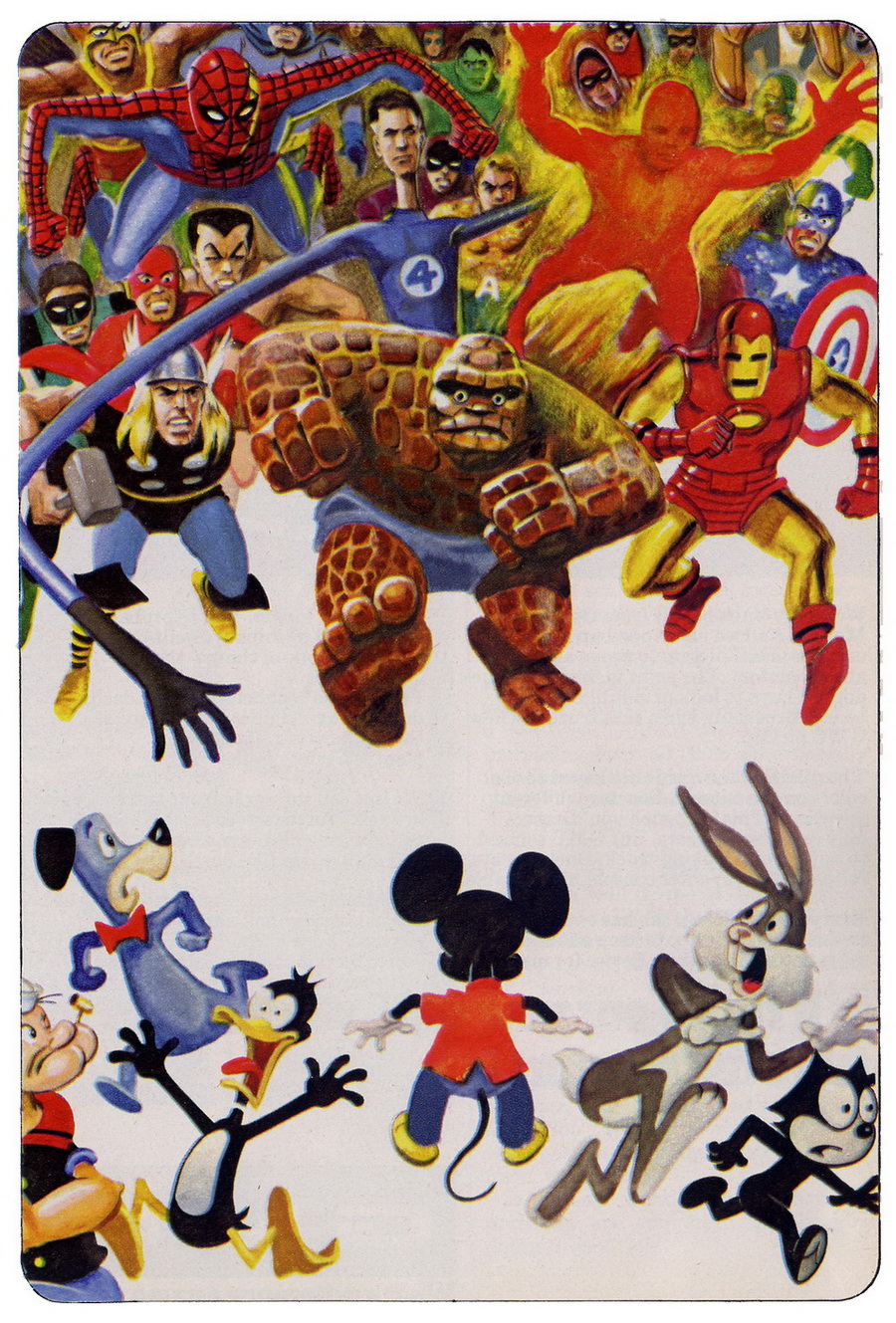
 Hi guys! Thanks for inviting us to the party... don't run, we brought hugs!

So here's what I'm thinking. You're born, early infancy, what do you watch? Disney movies. And then you grow a bit, look for a little more edge, a little more maturity, and you find Marvel (at least I did). You kind of leave Disney behind except for fond memories, and still thinking Lion King is bad-ass and humming Hakuna Matata while you write :P

But now Disney stands poised to obtain Marvel. Disney's shares are worse off than Marvel, and from all the products floating around, I get the sense the crisis isn't exactly killing the comic giant. So I'd assume that if Disney has any sense, they won't look to change a thing, rather the opposite, give Marvel more resources to, like Wolverine, be the best at what they do.

And this means Disney now has an even bigger monster of a brand (if that was even possible). If this goes through, Disney can be the over-arching name responsible for so many elements of your imagination from the day you're born to the day you die as an overgrown kid who still gets excited at the thought of super-heroes. The full range - from flowery happy Bambi and Mermaid to dark discussions of humanity like Marvel Civil War and Earth X. It's a one-stop shop of awesome, just shift to the next age slot as you grow and Disney's got you set.

I don't think it's too bad - very influenced by the crisis I think though. But it's not like I'm hoping for Lucasarts to join the club now or anything, just to complete the set. The standard concerns are of course present: is this going to kill the Marvel spirit? Will they be watered down? Will vision be lost in too many layers of hierarchy? Will we begin to see cross-overs? Will Mickey don a crime fighting mask? Will we get a Kingdom Hearts: Marvel Avengers? (Sora, Hercules, Sephiroth and Cap in one game?)

Let's see how this goes... Here's to you Mickey, Spidey. Make friends, play nice. Stay out of each other's backyard and be good neighbors.

P.S. I know the image above isn't all Marvel vs Disney, but gimme a break, it's a great fit right? 

My Darling Jumping - Trigger and Environmental Feedback Loop Mechanics

This article discusses a certain type of mechanics, which I playfully call trigger-Whoa, where players trigger an action and then interact with autonomous systems in the environment, providing an unpredictable, emergent and watchable experience. This is responsible for some of my most cherished memories as a gamer, and is one of the fields gameplay designers should seek to develop.

.::.---.::.

I've always loved jumping in games, falling and adjusting my landing to make it. Or swinging in the good Spider-Man games (2, Ultimate, Web of Shadows). Or drifting in Outrun. Crashing in Burnout. The list goes on. I've sat and considered the common feeling I get when playing these games. In my mind, I call it Fshhhhh, could also be described as a trigger-Whoa feeling.

 
Crackdown jumping is epic. [Img Source]

Essentially, the common element in all these mechanics is that they are triggered directly by the player who decides when to jump, swing, brake, explode, etc. But then something else happens. It's not a scripted event - the player is thrown into a potentially lengthy period where they can only control their avatar indirectly, as it is being affected by some element of the environment (often a physics model).

Back in the day, it wasn't that easy to have autonomous systems beyond your direct character control - processing power was limited, spent on enemies (direct challenges), objectives (tokens) and such. Having a fall pull you down in the Y axis faster than you can adjust the X already made for fun jumping in Mario.

Contemporary game jumps can be affected by complex physics, and calculate for friction, wind, etc. Even a tiny little game on the iPhone, Mr. Aahh!!, pulls this off well: all you do is tap the screen to release your character as he swings in order to land in the center of a platform with variable width. Land, he runs and swings again. Straight up arcade gameplay, getting more challenging with each swing. As far as I've played, wind and gravity come into play, and you can adjust the fall slightly by tilting the device. Great fun, and gets hard quickly. Made it to H-2 first time if I'm not mistaken. :)

Now, with little effort, we can incorporate solid autonomous systems like physics and world AI, and the result can be far more engaging, emergent and unpredictable. It can make for solid gameplay with incredible replay value. Take something like 'Splosion Man, where all you do is 'splode (sorry, couldn't help myself). By blowing yourself up, you're launched with a a simple physics engine, and can steer or explode again (up to 3 times). But if you factor in up to 4 co-op players, exploding barrels, the ability to regain explosion power by sliding down walls ... That's a lot of flying, and collective "Whoaaaa is he gonna make it???" moments. I think this is also why Peggle is so madly successful and addictive - you launch that little ball and watch it bounce around the pegs with a pretty decent little physics model. If you've ever played Peggle with a few people watching, you know they'll draw their breaths in tense expectation, eyes tracking the ball's every movement, letting out a collective cheer when you hit that middle slot and the Ode to Joy (inspired sound design!) plays.

These games have the potential vast replayability since, like in real life, minute adjustments to these trigger activities can cause dramatically different outcomes.They are also immensely watchable, since people can intuitively understand the actions and all share a tension, us vs. the game world, if you will, once the initial trigger is activated. Will he hit that target vehicle with this lucky collision in Burnout crash mode? Can he slingshot round the skyscraper fast enough to catch that other building in Spider-man?

And then we've all had our laughs with emergence, from rag-dolls in ridiculous positions and glitchy spasms, to idiot AI staring at the wall one minute and beating on a team-mate the next. I think you can certainly say there are plenty of these trigger-Whoa moments in games with great sandbox AI like GTA, Bioshock - throwing in that one little grenade or shot and watching all hell break loose, often caught between explosions and enemies in the chaos you started. That's a little higher level, on a complex dynamic rather than mechanic level, but it still shares that core of activating and watching what unpredictability happens next, while trying to adjust your response.

I know that sometimes developers are tempted to take the easy way out - script/animate 2 or 3 jumps, for example, and make them bad-ass and cycle randomly when you jump, rather than worry about a full physics rig that can flap about in crazy, unpredictable and goofy ways. But while there can certainly be the case for cinematic, well put together sequences, I tend to prefer these in games like Fahrenheit (Indigo Prophecy), where you don't expect or need to be given full physical control, just the ability to guide. If I'm playing an action game, I don't even much enjoy stylish, cinematic kills (for example) unless there's some kind of contextual control at least (not quick-time events), like in Assassin's Creed or Fable II.
The thing is, I see cinematic solutions as a crutch more often than not, flash added to stale mechanics, instead of a genuine exploration in new ways of doing things. I love that we're getting technology like Euphoria, which helps us get closer to the best of both worlds. Splicing in those bad-ass diving poses while falling in a rag-doll that protects its head is now possible, and this should ring a bell in gameplay designer's minds.

I think we as developers have no excuse not to keep driving the experience forward, and evolving the art. As a designer, I'm principally concerned with gameplay and feel, and think that if you succeed in establishing that feeling of suspense and drawn breath, adding the visual flair on top of it is a simple affair.

I'm only talking about a certain kind of experience, and not proclaiming it the only one, far from me. I love my beautifully blended, non-physics enabled animations in Dead or Alive, for example, and constantly appreciate how well they give me more back as soon as I learn to control them better. I need to play Flower on the PSN again, but in my memory it did a great job at simulating environmental feedback when there was none with the sound design and visual effects, like the blurring while moving faster or parting of blades of grass.

But I will say this, some of the most memorable mechanics for me are the ones that brought out this feeling, and it is very often to those games I will return after years and years, just for another jump, another run, another little joyride, 20 minutes of fluid, dynamic and flowing gameplay. I still remember how crazy and fun it was to ride those waves in Wave Race 64 and go flying on the larger ones, hoping to make the landing within bounds. In fact, I think I've made my point, and will go do a little racing now.

Take care, and happy jumping!

Saturday, August 29, 2009

Returning Beauty or Taking Life? – An Essay on Game Design

If you play video games, you understand killing. Well, at least in terms of destroying virtual adversaries – not the real kind (and I’m glad for it too). Games are quite eloquent in the many ways they allow you to tear apart, explode, maim and otherwise obliterate anything standing between you and the Ultimate ____ of ____.

I guess (and can understand) that a lot of it comes down to ease of development. It seems the universal axiom applies: it’s easier to destroy than to create. Take low resolution 2D – components of structures (pixels) can hardly be identifiable as anything more than dots of color on their own; once organized in a structure, however, they make sense, and we see our Mario, Pac-Man, Space Invaders. It’s fascinating to watch a pixel art piece build up bit by bit, but you’ve got little to tell you what’s being built unless you know what you’re looking for. And so, the effect of watching something grow or be born, has little definition and detail and is because of this much less powerful.

Blow a chunk of pixels into smaller chunks, though, and that’s a whole different story. Watch it go boom! We instinctively understand destruction, I think, because it’s inescapable in our everyday lives – we watch entities be split into component parts all the time, both physically and metaphorically. And so, I argue, it’s easier to destroy, and more effective at communicating to the player’s emotions, than it is to grow or give life.

Then you get 3D, with a lot more detail and mass to support your image. I’ll take an admittedly easy example to make my point: destroy something with firepower in a game and watch it explode. One of the simplest tricks in games is to hide changes in effects like clouds of smoke, so the player can’t see an intact wall being replaced with a crumbled rock, and hunks of road awkwardly spawned and tossed out from a point in mid-air.

How would you do the same for re-building the wall in front of your eyes? Blowing it up in reverse? Hiding the appearance of rocks and pieces with glittery clouds of magic? Ideally, you’d animate everything coming out of the ground itself or surroundings, smoothly (or not) flying in, right? That needs to be animated, and isn’t usually something handled well by physics engines – unlike shopping a rocket at a fragile wall and watching it blow.

So, those are pragmatic reasons. But what about the emotional impact, what about (oh no! he’s gonna say it!) the art? What about the beauty of creating or returning beauty, rather than taking it? We’ve seen so much destruction and doom in our games – I praise the ones with the balls to step out in the sun with their happy faces, and kick just as much ass as their steel-jawed power-armor cousins.

(By the way, I’d like to shake your hand for reading this far – that’s a chore even for myself. But hold on tight, biggest paragraph still to come.)

Pandemic’s upcoming game, The Saboteur, uses what seems a wonderful dynamic to represent the liberation of oppressed WWII Paris: returning color, sound and motion into the areas you galvanize with your drunken Irish antics. I love it, it’s inspired.
Blood Will Tell by WOW Entertainment for the PS2 started with everything in black and white – until you got your missing eye at the end of the first level (the discussion of the search for components is a whole new blog post), returning color to your screen. It made the experience so much more rewarding.
 Bit.Trip Beat by Gaijin Games gives you more visuals, more sound as you make chains – and takes them away when you miss your little pixel enemies.
And Rez, magnificent Rez by Q Entertainment (maybe not the perfect example, but any excuse to talk about Rez is a good one) – how the levels filled out as you progressed through them, the rhythmic waving and pumping of the landscape more and more dramatic as you approach each area’s boss. And the end level itself – an epic story of the birth of life, from the eyes of a virus killing computer probe-avatar-thing.
Okami by Clover Studios tells a beautiful, touching story of returning life to a cursed land. Each conquest, accompanied by flowing flowers and greenery and celebratory music, feels like a true victory. It is this vision that satisfies, and far more than the success in the preceding boss fights or puzzles (at least for me).
Space Invaders Infinity Gene on the iPhone is designed around the concept of evolution, and takes the player on a very literal journey of gameplay evolution, a world increasing in detail and complexity as you progress. You’re laying waste to hordes of enemies – but birthing an evolved world in the process.
There are many more… but not as many as I’d hope.

There’s a common feeling of healthy happiness and wholesome satisfaction in experiencing this kind of dynamic; an exhilaration different from the adrenalin rush of destruction, which is a far more selfish and mischievous impulse.

And I’m not saying I don’t want more destruction done artfully… give me my Ninja Gaiden, God of War, Gears, Mercenaries, Red Faction, Worms… I’d just like to have at least an equal dose of games that try to do something differently, and go for the greater and more subtle challenge of communicating the deeply rooted and long term joys of creation vs. the immediate and crude thrill of the kill.

What do you think? What other games can you think of that deal with this duality? Do you agree or think I’m full of it?

Thanks for your time, and reading this verbose rant. That’s how I roll, I guess – I talk a lot.

So, to be short…

kthxbai!

First Words

Hello, my name is Zé and I like to philosophize and write. Born in '84, BSc in Computer Science, I'm a game designer, actively working, going on my 2nd year as a full-time member of the video game industry.

I call the blog Ice 9 in tribute to Cat's Cradle by Kurt Vonnegut Jr., one of the most important novels I've read, discussing - among other things - the truths, goodness and love that may stem from the absurd. Life can seem to make sense at times, others be chaotic. If we can glean meaning from the irrational, impossible, I say, we can understand existence and ourselves far better.

Ice 9:42 - because we should always try to keep asking questions. Even if we think we have the answers.

I'll use this blog for all my more socially relevant and professionally interesting writing, my musings on games and more.

To learn more about me personally, check lvm42.blogspot.com.

Enjoy your read, and keep on chillin.